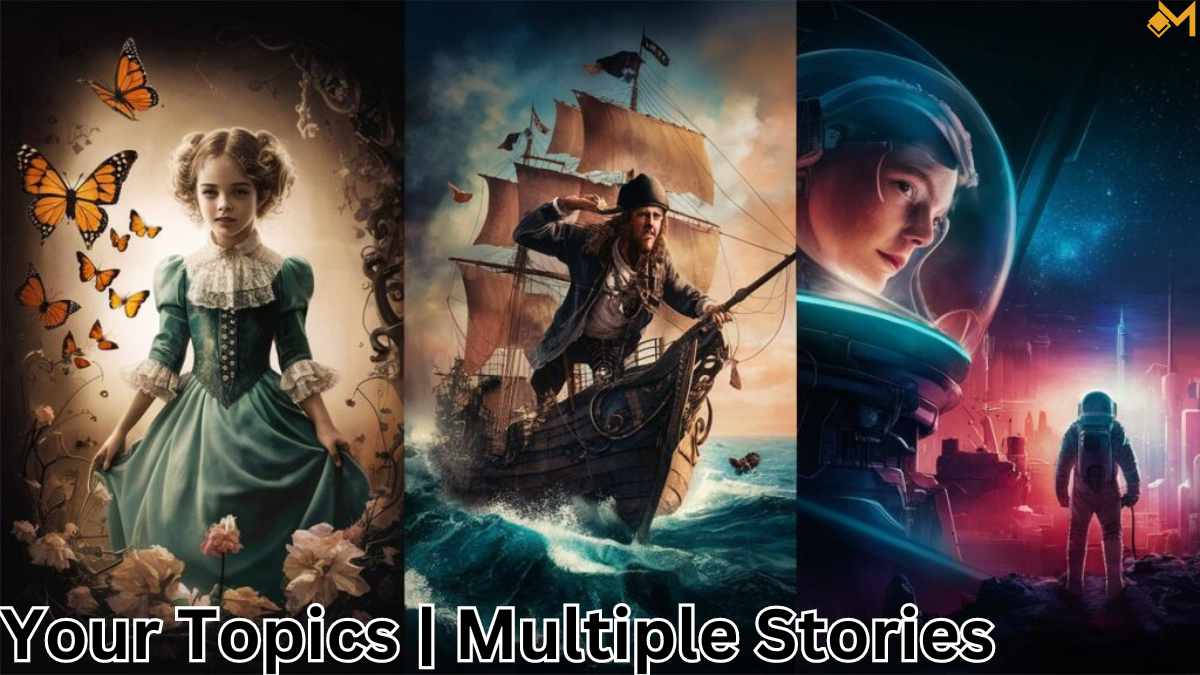
In the age of information, the concept of “your topics” is more relevant than ever. Every individual carries a unique set of interests, passions, and experiences that shape their worldview. The phrase “your topics” can represent the diverse array of subjects that resonate with each person, from the deeply personal to the widely universal. When these topics are explored through multiple stories, they create a rich tapestry of narratives that reflect the complexity and beauty of human experience.
Short answer: “Your Topics, Multiple Stories” means exploring one subject you care about through several different narratives — personal, expert, analytical, and visual — instead of a single article or viewpoint. The approach builds deeper understanding, reaches different audiences, and, for creators, turns one topic into a lasting body of work rather than a one-off post.
This article delves into the significance of “your topics” and how they manifest in multiple stories. We will explore various forms of storytelling, the impact of personal narratives, and the power of diverse voices in shaping our understanding of the world. Through this exploration, we aim to celebrate the diversity of topics that matter to individuals and the multiple stories that bring those topics to life.
What Does “Your Topics, Multiple Stories” Actually Mean?
At its simplest, the idea has two parts. “Your topics” are the subjects that genuinely matter to you — the themes you keep returning to, the questions you keep asking, the causes you keep following. “Multiple stories” is the practice of exploring each of those subjects through several distinct narratives rather than one definitive account. A documentary series works this way: the same subject is examined through interviews, data visualisations, personal accounts, and expert analysis, and every piece adds something the others cannot.
The phrase has also become a description of how modern media works. News apps and platforms now ask you to follow topics — climate, technology, housing, health — and serve you parallel accounts of the same event: a tenant’s personal story, a landlord’s economic breakdown, a policy analyst’s view, and a photo essay. That multivocality can enrich understanding enormously, but it also depends on the quality of the curation and on the reader’s willingness to look beyond the first story they are shown.
For writers, teachers, and content creators, the idea is also a practical strategy: instead of covering a subject once and moving on, you build a cluster of connected stories around it. Each story explores a unique angle, targets a different audience segment, or uses a different format, and together they create a comprehensive picture that a single piece never could.
The Importance of “Your Topics” in Storytelling
Personalisation in an Age of Information Overload
In today’s world, where information is abundant and readily available, the concept of “your topics” offers a way to personalise the vast sea of content we encounter daily. With countless news articles, social media posts, videos, and podcasts available at our fingertips, it’s easy to feel overwhelmed. However, by focusing on “your topics” — the subjects that truly resonate with you — you can navigate this information overload with greater purpose and intention.
Personalisation in storytelling allows you to connect more deeply with the content you consume. When stories align with your interests, values, and experiences, they become more meaningful and impactful. Whether it’s a novel that speaks to your love of history, a documentary that explores a cause you’re passionate about, or a podcast that delves into a hobby you enjoy, personalised stories have the power to captivate and inspire.
There is a practical side to this, too. Readers who follow a few topics deeply remember more and think more critically than readers who skim everything. Choosing your topics is an act of curation: it decides what you will learn properly and what you will let pass by. Writers can help by organising their work into clear topic clusters, so a reader who arrives for one story can easily find the others.
The Role of Storytelling in Shaping Identity
Your topics are not just a reflection of your interests; they are also integral to shaping your identity. The stories you choose to engage with, whether as a consumer or a creator, contribute to your understanding of who you are and how you relate to the world around you. These stories can reinforce your beliefs, challenge your assumptions, and provide new perspectives that enrich your sense of self.
For example, someone passionate about environmental conservation may seek out stories about climate change, wildlife preservation, and sustainable living. These stories not only inform their knowledge but also strengthen their identity as an advocate for the planet. Similarly, someone interested in cultural heritage may immerse themselves in stories about their ancestry, traditions, and history, deepening their connection to their roots.
Storytelling, in this sense, is not just about entertainment or education; it’s about self-discovery and identity formation. By engaging with stories that align with your topics, you create a narrative that reflects who you are and what you stand for.
The Power of Multiple Stories
The Beauty of Diverse Perspectives
The concept of multiple stories highlights the beauty of diverse perspectives. In a world as complex and varied as ours, no single story can capture the full scope of human experience. Multiple stories offer a mosaic of viewpoints, each contributing to a richer, more nuanced understanding of the world.
Diverse storytelling is particularly important in representing different cultures, backgrounds, and experiences. When multiple stories are told, they provide a platform for voices that may have been marginalised or overlooked. These stories challenge stereotypes, break down barriers, and foster empathy by allowing us to see the world through the eyes of others.
For instance, the global rise of storytelling platforms like podcasts, independent films, and social media has democratised storytelling, giving a voice to individuals from all walks of life. A podcast series featuring the stories of immigrants, a documentary showcasing the lives of people in remote communities, or a social media campaign amplifying the voices of activists — all these are examples of how multiple stories can enrich our collective understanding and promote inclusivity.
The Nigerian writer Chimamanda Ngozi Adichie captured this in her widely watched talk on “the danger of a single story”: when we hear only one story about a person or a place, we risk misunderstanding them entirely. Multiple stories are the antidote. You can watch her talk on YouTube — it remains one of the clearest explanations of why diverse narratives matter.
The Role of Multiple Stories in Social Change
Multiple stories have the power to drive social change by highlighting issues that need attention and inspiring action. Throughout history, storytelling has been a powerful tool for raising awareness, challenging the status quo, and mobilising communities. When multiple stories converge around a common cause, they can create a movement that leads to meaningful change.
Consider the role of storytelling in the civil rights movement, the feminist movement, or the fight for LGBTQ+ rights. Each of these movements was fuelled by the stories of individuals who shared their experiences of injustice, discrimination, and resilience. These stories, told through speeches, books, films, and other mediums, galvanised public support and played a crucial role in advancing social progress.
Today, multiple stories continue to drive social change in areas such as climate action, racial justice, and mental health awareness. By amplifying the voices of those affected by these issues and providing a platform for diverse narratives, storytelling can challenge societal norms, shift public opinion, and inspire collective action.
Exploring “Your Topics” Through Multiple Stories
Personal Stories: The Heart of “Your Topics”
At the heart of “your topics” are personal stories — narratives that reflect your individual experiences, challenges, and triumphs. These stories are often deeply meaningful because they are rooted in your lived reality. Whether shared with a close friend or a wider audience, personal stories have the power to resonate on an emotional level, creating connections that transcend differences.
For example, consider a person who has overcome a significant life challenge, such as surviving a serious illness or coping with the loss of a loved one. Their personal story, when shared, can offer comfort and inspiration to others facing similar struggles. It can also raise awareness about important issues, such as the need for better healthcare or support for grieving individuals.
Personal stories are also a way to preserve memories and pass down knowledge to future generations. In many cultures, storytelling is a tradition that keeps the wisdom of the elders alive. These stories, whether about family history, cultural practices, or life lessons, are invaluable in maintaining a sense of continuity and identity.
Fictional Narratives: Imagination and “Your Topics”
While personal stories are grounded in reality, fictional narratives offer a different way to explore “your topics” through the lens of imagination. Fiction allows you to explore hypothetical scenarios, create alternate realities, and delve into the human condition in ways that non-fiction cannot.
For those passionate about certain topics, fiction can be a powerful tool for expression. A writer interested in social justice might create a dystopian novel that critiques current societal structures. A filmmaker fascinated by the human psyche might craft a psychological thriller that explores the complexities of mental health. Through fiction, creators can address “your topics” in ways that are both thought-provoking and entertaining.
Moreover, fictional narratives often serve as a mirror to society, reflecting and commenting on real-world issues. Consider how science fiction has addressed topics like technology, ethics, and the future of humanity. By imagining what could be, fiction invites us to think critically about the present and consider the possibilities of the future.
Non-Fiction: The Power of Truth in “Your Topics”
Storytelling is another powerful way to explore “your topics,” particularly when truth and accuracy are paramount. Non-fiction includes a wide range of formats, from memoirs and biographies to documentaries and investigative journalism. These stories provide factual accounts of real events, offering insights into the world as it is.
For individuals passionate about history, science, politics, or social issues, non-fiction provides a wealth of information and analysis. A biography of a historical figure, for instance, can offer a deeper understanding of their life and contributions. An investigative report on a pressing social issue can shed light on the root causes and potential solutions.
Non-fiction storytelling is also essential for educating and informing the public. In an era where misinformation is rampant, accurate and well-researched non-fiction stories are crucial for helping people make informed decisions and understand complex issues. By focusing on “your topics” through non-fiction, you can contribute to a more informed and engaged society.
Visual Storytelling: The Impact of Images and Media
In addition to written narratives, visual storytelling is a powerful way to explore “your topics” through multiple stories. Images, videos, and other forms of visual media have a unique ability to convey emotions, ideas, and messages in ways that words alone cannot. Visual storytelling can be found in photography, film, television, art, and even social media platforms like Instagram and TikTok.
For visual storytellers, “your topics” can be explored through the lens of a camera or the stroke of a brush. A photographer passionate about environmental conservation might capture stunning images of endangered species, raising awareness about the importance of protecting wildlife. A filmmaker interested in social justice might create a documentary that highlights the struggles of marginalised communities, giving a voice to those who are often unheard.
Visual storytelling is particularly effective in our digital age, where people are constantly consuming content on their screens. A powerful image or video can go viral, spreading a message to millions of people in a matter of hours. This immediacy and impact make visual storytelling a valuable tool for exploring and sharing “your topics.”
How to Build Your Own “Multiple Stories” Framework
The idea is most useful when it becomes a method. Here is a practical framework, used by many writers and content creators, for turning one topic into several connected stories.
Step 1: Choose a Core Topic with Depth
Pick a theme broad enough to support several angles but specific enough to have a clear focus. “The rise of sustainable footwear” works; “shoes” is too vague and “one brand’s recycled trainer” is too narrow. Good topics usually have tension in them — a debate, a change, a problem people care about solving.
Step 2: Map Four Angles with PECA
A useful way to plan angles is PECA: Personal, Expert, Case study, and Analytical. For the sustainable footwear example: a personal essay from someone who switched to ethical brands; an interview with a founder using recycled materials; a case study of one company’s supply chain; and a data-led article on the environmental impact of traditional shoe manufacturing. Each angle serves a different reader, and together they cover the topic properly. Add a fifth angle — the sceptic’s view — whenever a topic is contested, because addressing objections builds trust.
Step 3: Match Each Angle to the Best Format
Not every angle belongs in an article. A personal story may work best as a short video or podcast episode; data suits an infographic or a chart-led article; an expert interview suits audio; a how-to guide suits text with screenshots. Mixing formats reaches people who learn differently and gives each story the medium it deserves. For tips on strengthening written pieces, see our guide to advanced vocabulary for elevated essay writing.
Step 4: Link the Stories Together
Each story should stand alone but point to the others. End articles with links to the related stories in the cluster, and keep a central hub page for the topic. This is how a collection becomes a resource: a reader who arrives for one perspective discovers the rest. Search engines reward this, too — publishers that organise content into clusters around core topics tend to earn more organic traffic than those publishing disconnected one-off posts.
Step 5: Revisit and Refresh
Topics evolve, and so should their stories. Revisit a cluster every few months: update facts and figures, add a new angle, and retire anything that has gone stale. A topic cluster is a living body of work, not a finished project.
The Interconnectedness of Stories
How Multiple Stories Influence Each Other
While individual stories can stand alone, they often intersect and influence each other in meaningful ways. This interconnectedness is a key feature of storytelling, where themes, characters, and ideas from one narrative can resonate with or inspire another.
Consider how literature has influenced film, or how historical events have inspired works of fiction. A novel that captures the complexities of human relationships might inspire a filmmaker to adapt it into a movie, adding visual and auditory elements to the story. Similarly, a historical event might serve as the basis for a fictional narrative that explores the same themes in a different context.
The interconnectedness of stories also allows for a richer exploration of “your topics.” When multiple stories address the same subject from different angles, they provide a more comprehensive understanding of the topic. For example, the issue of climate change can be explored through scientific articles, personal stories of those affected by natural disasters, fictional narratives set in a dystopian future, and visual media that captures the beauty and fragility of the natural world.
The Global Impact of Shared Narratives
In today’s interconnected world, stories have the power to transcend geographical boundaries and cultural differences. The global impact of shared narratives is evident in the way stories spread across countries and continents, influencing people from diverse backgrounds.
The rise of the internet and social media has made it easier than ever for stories to reach a global audience. A video created by an activist in one part of the world can be shared and viewed by millions of people in another, sparking conversations and inspiring action on a global scale. Similarly, a novel written by an author from a different culture can introduce readers to new perspectives and broaden their understanding of the world.
Shared narratives have the potential to create a sense of global community, where people from different parts of the world connect over common themes and experiences. Whether it’s through the universal themes of love and loss, the shared struggle for justice, or the collective concern for the environment, stories have the power to unite us across differences.
The Other Side: Filter Bubbles and Single Stories
Personalisation has a risk worth naming. When platforms only show you stories that match your existing topics and views, you can end up in a filter bubble — hearing the same perspective repeated while others disappear. “Your topics” should be a starting point, not a fence. Deliberately seek out stories that challenge your assumptions: read the case against your position, follow a creator from a different background, and compare how the same event is covered by outlets with different perspectives. Multiple stories only deepen understanding when they genuinely differ; five versions of the same opinion add nothing.
Creators carry the same responsibility. If every story in your cluster agrees with you, add the dissenting angle. Readers notice, and they trust you more for it.
Frequently Asked Questions
What does the phrase “Your Topics, Multiple Stories” mean?
This phrase refers to the diverse range of subjects that resonate with an individual and how these topics can be explored through various narratives. It emphasises the uniqueness of personal interests and the richness that multiple stories can bring to those topics.
How can I identify “my topics” for storytelling?
To identify your topics, reflect on your passions, interests, and experiences that matter most to you. Consider the subjects that capture your attention, the issues you care about, and the themes you find yourself returning to in books, movies, or conversations. A practical test: the topics you would still want to read about after a long day are your real ones.
Why is it important to explore multiple stories around a topic?
Exploring multiple stories around a topic provides a more comprehensive and nuanced understanding. Different narratives offer varied perspectives, which can deepen your knowledge, challenge your assumptions, and enrich your appreciation of the subject.
How do personal stories contribute to “Your Topics”?
Personal stories add depth and authenticity to your topics by reflecting your unique experiences and viewpoints. These stories can resonate on an emotional level, helping you connect with others who share similar interests or challenges.
Can “Your Topics” evolve over time?
Yes, your topics can evolve as your interests, experiences, and knowledge grow. As you encounter new ideas and perspectives, you may find yourself drawn to different subjects, leading to the exploration of new stories and narratives.
How many stories should one topic have?
There is no fixed number, but three to five distinct angles — personal, expert, case study, and analytical, plus a sceptical or opposing view where relevant — is a good starting point for covering a topic properly without repeating yourself.
Conclusion
The exploration of “your topics” through multiple stories is a celebration of the diversity and complexity of human experience. Each individual’s unique interests, passions, and experiences contribute to the rich tapestry of narratives that shape our world. Whether through personal stories, fictional narratives, non-fiction, or visual storytelling, the stories we engage with reflect who we are and what matters to us.
In a world where information is abundant, focusing on “your topics” allows you to navigate the vast sea of content with intention and purpose. By engaging with multiple stories that align with your interests and values, you create a narrative that reflects your identity and contributes to your understanding of the world.
As we continue to share and explore stories, let us celebrate the diversity of voices and perspectives that make up the tapestry of human experience. By embracing multiple stories, we can foster empathy, understanding, and connection, both within ourselves and with others. In doing so, we enrich our lives and contribute to a more inclusive and compassionate world.
Sign up for our Daily newsletter
We'll be in your inbox every morning Monday-Saturday with all the day’s top business news, inspiring stories, best advice and reporting from Entrepreneur,