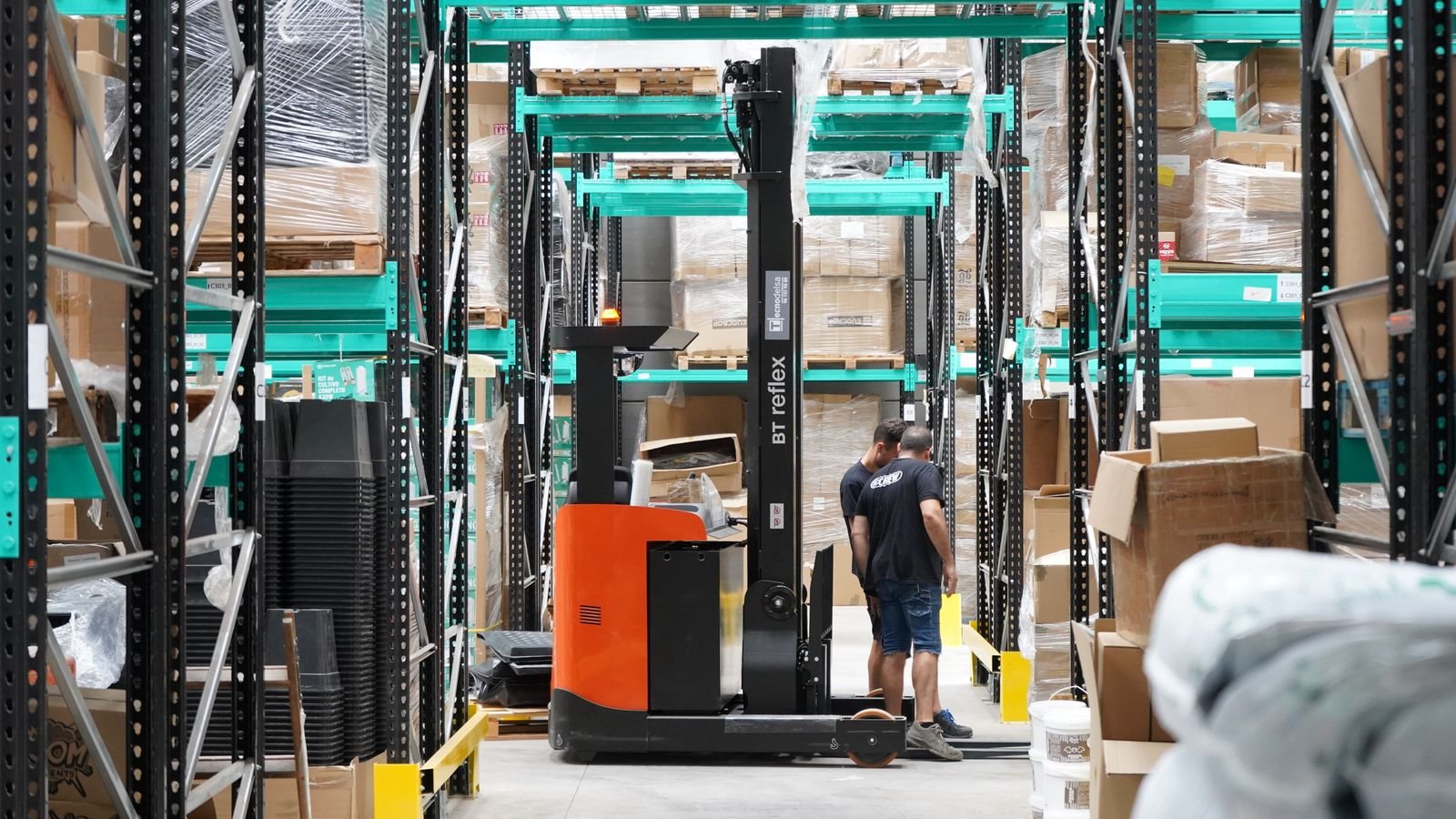
A business function taxonomy for ecommerce groups technology and operations into two connected categories: technology builds and runs the systems that sell, while operations moves the orders those systems create — from inventory and checkout through fulfilment, shipping and returns. This guide maps both functions, shows which roles and systems belong in each, and gives you a six-step method for building the taxonomy.
Ecommerce is the hardest part of a company to classify, because one online order touches marketing, merchandising, technology, finance, operations and customer service at once. When nobody agrees which function owns which piece, work falls between teams: the website team blames the warehouse, the warehouse blames the platform, and the customer waits. A clear taxonomy ends that argument by naming who owns what.
What Is a Business Function Taxonomy in Ecommerce?
A business function taxonomy groups all the work a company does into a hierarchy of categories and subcategories. In ecommerce it answers one question for every task, role and system: which function does this belong to, and who owns it?
Eurostat defines the split at the heart of every taxonomy: core functions yield income, while support functions are the ancillary activities that permit or facilitate them. In an online store the core is selling and fulfilling; everything else, from the payment gateway to the returns desk, exists to make that core work.
That distinction matters because ecommerce taxonomies are often drawn from product catalogues instead of from work. A product taxonomy classifies what a business sells; a business function taxonomy classifies what people inside the business do — and confusing the two is the most common mapping mistake. Our guide to business function taxonomy categories used in companies lists the full set of categories most companies use.
Why Technology and Operations Sit Together
In a traditional retailer, technology and operations are separate worlds: IT runs the computers, the warehouse runs the stock. In ecommerce they are one connected operation, because the website, the order system and the warehouse share the same data in real time. When a customer buys the last unit of a product, all three must agree instantly — or the store sells stock it does not have.
Shopify describes an ecommerce tech stack as the connected set of software, APIs and services a business uses to sell products, fulfil orders and measure results. The stack is the technology layer of the operations function: the platform takes the order, the order system routes it, the warehouse system picks it, and the shipping tool tracks it. Each handover is a boundary the taxonomy should mark.
Classified separately with no shared owner, the two drift apart: stock levels go stale, orders stall, and returns take weeks. Mapped as neighbours with named handover points, each team knows exactly where its responsibility ends and the next team’s begins.
The Ecommerce Technology Function
The technology function builds, configures and maintains the digital systems behind the online store, split into three sub-functions: platform and storefront, checkout and payments, and integrations and data.
Platform and Storefront
The commerce platform is the core infrastructure: it runs the catalogue, pricing and transaction engine everything else connects to. Around it sits the storefront — the pages, product descriptions, images, search and navigation the customer sees — and the content management system that lets non-technical teams publish without a developer.
Roles here include the platform manager, who owns the platform roadmap, and the front-end developer, who builds the storefront. The key question is whether a role owns the platform or merely uses it: a merchandiser who uploads products belongs in merchandising, even though they work inside the platform every day.
Checkout and Payments
Checkout and payments handle payment processing and capture the order: the checkout flow, payment gateways, fraud checks and tax calculation. It is the most sensitive part of the store — a one-second delay or one failed payment method costs real revenue.
Ownership must be explicit: the platform team usually owns checkout configuration, while finance owns payment reconciliation and refunds. When neither owner is named, refund disputes and failed payments bounce between teams with nobody accountable.
Integrations and Data
No platform works alone. It connects to the warehouse system, the customer relationship system, the email platform, the analytics tool and the accounting software. Integrations and data covers those connections, plus the customer data platform and reporting layer that turn raw records into decisions.
The systems integration specialist and the solutions architect live here. Their work is invisible when it succeeds and catastrophic when it fails: a broken integration between store and warehouse is how overselling happens. List integrations as their own sub-function, not buried inside “IT support”.
The Ecommerce Operations Function
The operations function moves the order from the screen to the customer’s door, from checkout until the product arrives — or comes back. It splits into three sub-functions: inventory and order management, fulfilment and shipping, and returns and service exceptions.
Inventory and Order Management
Inventory management tracks stock, replenishment and forecasting across every warehouse and channel. Order management captures each order, routes it to the right warehouse and tracks it until dispatch. Together they answer the two questions every ecommerce business asks daily: what do we have, and where is each order?
The ecommerce operations manager owns the flow, supported by order management specialists and fulfilment analysts. When inventory and order management sit in different functions, stock and orders disagree, and customers get cancellation emails for products the warehouse actually holds.
Fulfilment and Shipping
Fulfilment is the pick-pack-ship stage: once an order is placed, the right items must be located, picked, packed and dispatched. Warehouse management covers receiving, storing and tracking inventory, plus the layout and picking efficiency that set delivery speed. Shipping spans carrier selection, routing, tracking and the first and last miles of delivery.
Our guide to business process automation services shows how companies systematise this work: rules that route orders automatically, print labels without manual steps and flag exceptions before they become complaints. Automation belongs in operations, not technology, because its purpose is faster fulfilment — technology only supplies the tool.
Returns and Reverse Logistics
Ecommerce does not end at delivery. Returns, refunds and exchanges — reverse logistics — are a permanent part of the operation, reaching a third of all orders in fashion and footwear. Returns need their own owner, process and measures: return rate, refund time and resale recovery.
The returns coordinator usually sits in operations, though the work overlaps customer service and finance. Record operations as the primary owner and customer service as the secondary tag, so a returned parcel has one accountable function.
Technology and Operations at a Glance
| Function | What it covers | Primary systems | Example roles |
|---|---|---|---|
| Platform and storefront | Catalogue, pricing, pages, search | Commerce platform, CMS | Platform manager, front-end developer |
| Checkout and payments | Payment processing, fraud, tax | Payment gateway, checkout | Solutions architect, QA analyst |
| Integrations and data | Connections, reporting, customer data | CRM, CDP, analytics | Systems integration specialist, data analyst |
| Inventory and order management | Stock, replenishment, order routing | IMS, OMS | Ecommerce operations manager, fulfilment analyst |
| Fulfilment and shipping | Pick, pack, ship, track | WMS, shipping tools | Warehouse manager, logistics coordinator |
| Returns and reverse logistics | Refunds, exchanges, resale | OMS, RMS | Returns coordinator, customer service lead |

How Roles Map to Technology and Operations
Classifying ecommerce roles is where most taxonomies fail, because job titles are misleading. An ecommerce manager in a small business may own merchandising, promotions, analytics, platform administration and customer experience, while in an enterprise those responsibilities are split across five teams. Classify by primary accountability — what the role is measured on and what decisions it owns — not by title or reporting line.
Technology delivery vs platform ownership vs business administration. Not every technical role belongs in the same category. A developer who builds features sits in technology delivery; a platform manager who configures the store sits in platform ownership; a product owner who decides what the store should do next may belong in digital product management. Each has a different manager, budget and measure of success.
Primary and secondary classification. Because ecommerce is cross-functional, a single classification field is often not enough. A mature taxonomy records a primary business function and a secondary tag for the domain supported — a data analyst can remain in analytics while tagged with ecommerce, a platform engineer in technology while supporting the ecommerce capability. This avoids forcing inaccurate choices and keeps one source of accountability.
Roles that confuse the map. Some roles genuinely span functions. A digital business manager often covers technology, operations and merchandising at once — our guide on how to classify a digital business manager in a commerce taxonomy works through that case. A partner title is another puzzle: the work covers new markets, partnerships and revenue that does not yet exist in the pipeline, so it usually maps to strategy or business development — see our business development role taxonomy for the full breakdown. Consultants mapping functions for clients add process inventories, KPI sets and system maps for each function.
Business Function Taxonomy: Marketing vs Commerce
One boundary causes more arguments than any other: where marketing ends and commerce begins. Marketing brings qualified traffic to the store — paid search, social, email, SEO and affiliates. Commerce converts that traffic and fulfils the order — merchandising, the storefront, checkout and operations. Both touch the same pages: marketing writes the campaign landing page, commerce owns the product page it links to.
Follow the primary accountability. If a role is measured on traffic and pipeline, it belongs in marketing; if on conversion, order value and fulfilment, it belongs in commerce. A performance marketing manager sits in marketing when the team serves all channels, but in ecommerce acquisition when dedicated to ecommerce revenue. HR roles supporting the ecommerce team are likewise classified by their function, not the team they serve — our analysis of how HR roles map to business functions in ecommerce shows how that works in practice.
How to Build the Taxonomy in 6 Steps
Step 1: List everything the store actually does. List every recurring activity: uploading products, processing refunds, updating banners, deploying code, packing orders, answering delivery queries, reconciling payments. Aim for fifty to a hundred; a shorter list means you are listing departments, not activities — go finer.
Step 2: Group activities into technology and operations. Cluster activities by purpose: configuring the checkout, fixing a broken integration and deploying a storefront update belong in technology; picking orders, updating stock and booking couriers belong in operations. Expect the two functions to split into the six sub-functions in the table above.
Step 3: Assign one primary function to every role. For each role, ask what it is primarily accountable for, and give it one primary function plus, where needed, a secondary domain tag. A role with five primary functions has no owner — split it.
Step 4: Map every system to a function. Map each tool to its sub-function: the commerce platform to platform and storefront, the order system to inventory and order management, the warehouse system to fulfilment. A system with no owner is one nobody maintains; a function with no system runs on spreadsheets.
Step 5: Name the handover points. For every point where work passes from technology to operations — order capture, stock sync, dispatch notification, returns intake — note who sends, who receives and what “done” looks like. Most ecommerce failures live at these handover points, not inside either function.
Step 6: Review it every year. Capabilities change fast as businesses adopt marketplaces, subscriptions, mobile commerce and automation. Review the taxonomy annually with the strategy review, and update the owners at the same time. A taxonomy from three years ago describes a store that no longer exists.
Common Taxonomy Mistakes to Avoid
Classifying by job title instead of accountability. Titles vary widely; always check what the role is measured on.
Confusing ecommerce with marketing. Ecommerce covers commercial, operational, technical and service work, not only traffic generation — putting everything digital under marketing hides the operations work that delivers the order.
Creating too many categories. Six sub-functions are enough for most stores; add detail only where one is hard to manage.
Ignoring outsourced work. Map agencies, contractors and providers to the capabilities they support. A fulfilment partner is part of operations even though it is not on the payroll.
Forgetting the customer-facing functions. If the taxonomy has no category for the delivery experience, the delivery experience has no owner.
Frequently Asked Questions
What is a business function taxonomy for ecommerce?
It groups all the work in an online store into functions — technology, operations, marketing, merchandising and finance — so every task, role and system has one owner. It classifies what people do, not what the store sells.
Which business function does ecommerce technology belong to?
It belongs to the technology function: platform and storefront, checkout and payments, and integrations and data. Roles include platform managers, front-end developers, solutions architects, QA analysts and systems integration specialists.
What does ecommerce operations include?
It includes inventory and order management, fulfilment, warehousing, shipping and logistics, returns and reverse logistics, and the service exceptions that follow an order. It starts when checkout completes and ends when the product arrives — or comes back.
How do you classify ecommerce roles in a business function taxonomy?
Classify by primary accountability, not job title: what the role is measured on and what decisions it owns. Give each role one primary function and a secondary domain tag. An ecommerce manager in a small business may span several functions; the same title in an enterprise may sit in one.
Which category does a partner title fit in a business function taxonomy?
A partner title usually fits in business development or strategy, because the work covers partnerships, new markets and revenue that does not yet exist in the pipeline. If the work is mainly managing an existing channel relationship, it may sit in sales or commerce instead — the deciding factor is the primary accountability.
Where does a CEO fit in a business function taxonomy?
A CEO fits in strategy and leadership, which owns direction-setting, capital allocation and executive management. In a small ecommerce business the CEO may also work in technology or operations, and a good taxonomy records that secondary work. For the wider category list, see our guide to business consultant ecommerce category mapping.
Conclusion
Technology and operations decide whether an ecommerce business works: technology builds the store, the checkout and the integrations; operations moves the order from the screen to the customer’s door. Neither succeeds alone — a beautiful storefront with broken fulfilment loses customers, and a perfect warehouse behind a broken checkout never gets an order.
Build the taxonomy from your real activities, not from a template. Separate technology delivery from platform ownership, give every role one primary function, map every system to its sub-function, and name the handover points between teams. Then, when an order goes missing, a payment fails or stock disagrees with the website, you will know exactly which function owns the fix.
Sign up for our Daily newsletter
We'll be in your inbox every morning Monday-Saturday with all the day’s top business news, inspiring stories, best advice and reporting from Entrepreneur,