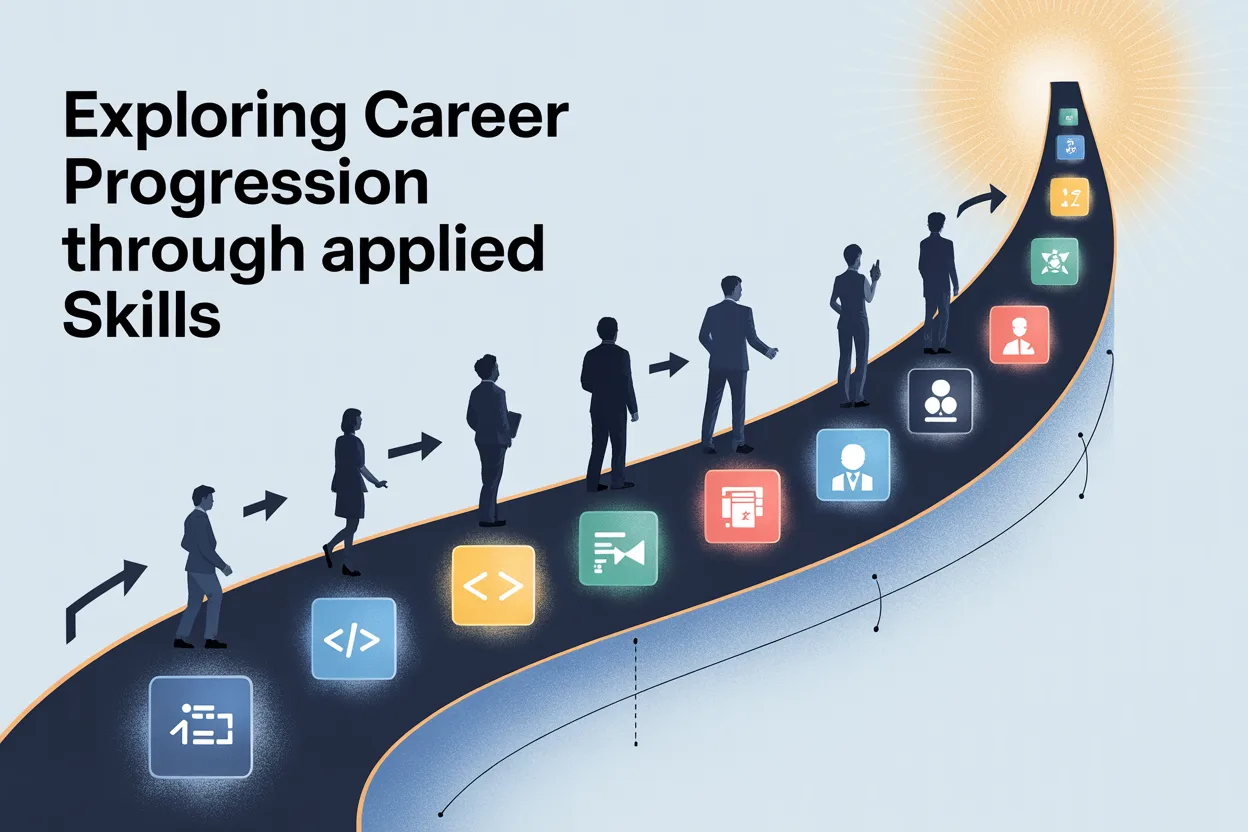
Career growth is often imagined as a ladder built from qualifications, promotions and titles. Yet in practice, progression usually happens in a quieter way. People advance when they demonstrate they can apply knowledge reliably, solve problems independently and improve outcomes without being prompted. These abilities rarely come from theory alone. They come from applied skills, and learning through doing, repeating and refining.
Applied skill development changes how others perceive your value. Instead of being someone who understands the role, you become someone the role depends on. That shift is what moves careers forward.
From Instructions to Judgement
Early in a job, most people follow processes closely. This stage is necessary because structure provides confidence. However, advancement begins when a worker understands why a process exists rather than simply how to perform it.
Once someone understands the reasoning behind tasks, they can make decisions. They adjust when circumstances change, prioritise effectively and prevent problems instead of reacting to them. Managers begin to trust judgement rather than supervision, and responsibility expands naturally.
Career progression often starts the moment a person stops waiting for guidance and starts interpreting situations independently.
Repetition Builds Authority
Experience alone does not create expertise; reflective repetition does. When the same activity is performed carefully over time, patterns appear. Workers begin to anticipate results before they happen. They notice inefficiencies others overlook and suggest improvements confidently because they understand consequences.
This predictability builds authority within teams. Colleagues seek advice from the person who has practical understanding rather than theoretical familiarity. Authority then becomes influence, and influence leads to leadership opportunities even before formal promotion.
Applied Training Creates Transferable Skills
Structured, hands-on learning accelerates this process because it compresses experience into focused practice. A well-designed training environment recreates real scenarios so judgement develops safely and quickly.
For example, completing a professional coffee making course with Ringtons teaches not just preparation techniques but timing, workflow awareness and quality control. These abilities transfer beyond hospitality. They reinforce attention to detail, consistency and problem-solving, which are key qualities valued in almost every profession.
The important part is not the specific task learned, but the decision-making habits built around it.
Reliability Leads to Responsibility
Managers promote reliability before ambition. Someone who consistently delivers predictable outcomes reduces risk for the organisation. Over time, this reliability leads to additional responsibilities: training others, managing processes, or coordinating tasks.
Responsibility then becomes evidence of leadership capability. Instead of requesting advancement, the worker demonstrates readiness for it.
This is why applied skills matter. They produce measurable results rather than potential.
Communication Develops Alongside Competence
As practical confidence grows, communication improves. People explain processes more clearly because they understand them deeply. They answer questions calmly because they anticipate concerns.
This clarity changes workplace dynamics. Colleagues collaborate more easily, and customers trust guidance more readily. Communication, therefore, becomes another indicator of readiness for progression, even though it originates in technical competence.
Adaptability Signals Seniority
Higher roles require flexibility. Situations rarely match expectations perfectly, and organisations depend on people who can adjust without disruption.
Applied skills build adaptability because the worker has encountered variation repeatedly. Instead of memorising one scenario, they recognise underlying principles and apply them to new conditions. This ability marks the transition from operator to decision-maker.
Teaching Others Confirms Mastery
One of the clearest signs of career development is the ability to train someone else effectively. Teaching requires breaking complex tasks into understandable steps and anticipating mistakes before they occur.
When a person can guide others to consistent results, they demonstrate leadership capacity. Many promotions begin not with managing people, but with mentoring them informally.
Applied skills make teaching possible because the knowledge is practical rather than abstract.
The Real Path of Progression
Careers rarely move forward through single achievements. They progress through accumulated trust. Applied skills build that trust because they show capability under real conditions, not just ideal ones.
Over time, a pattern appears:
- reliability leads to responsibility
- responsibility leads to influence
- influence leads to advancement
Qualifications may open doors, but demonstrated competence keeps them open.
A Different View of Growth
Career progression is less about climbing and more about expanding usefulness. Each practical skill learned increases independence and confidence, which changes how others rely on you. Eventually, opportunities arise naturally because the organisation already treats you as capable of more.
Applied skills therefore shape not only what you can do, but what others believe you can handle. And in most workplaces, belief in your capability is the true driver of advancement.