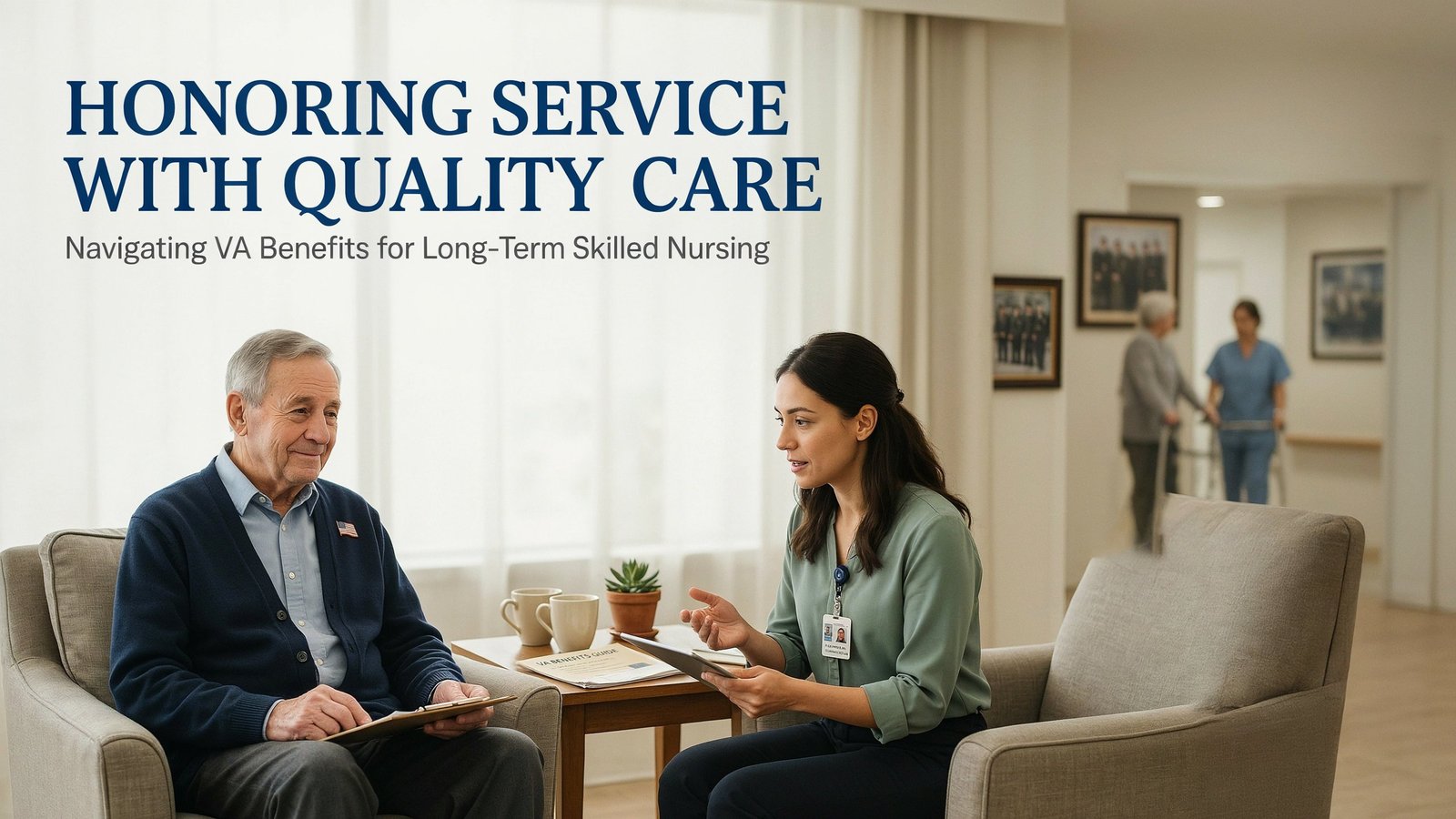
Veterans who have dedicated their lives to serving the nation deserve access to exceptional medical support, dignity, and comfortable living as they age or recover from complex medical setbacks. However, navigating the intersection of military benefits, healthcare systems, and long-term residential options can feel overwhelming for aging veterans and their families. Many military families remain unaware that the Department of Veterans Affairs (VA) maintains formal contracts with select community facilities to cover the cost of short-term rehabilitation and long-term residential support. Finding an approved facility that specializes in va nursing home care ensures that eligible service members receive gold-standard clinical supervision without placing an unsustainable financial burden on their households.
At Oakmont Guest Care Center in Hurst, Texas, honoring military service is central to the care delivery model. As a VA-contracted facility, Oakmont Guest Care bridges the gap between federal healthcare benefits and personalized, community-based skilled nursing. By combining 24/7 medical oversight, comprehensive physical rehabilitation, and dedicated administrative support for benefit verification, veterans are empowered to heal and thrive in a warm, home-like environment.
1. Understanding VA Community Nursing Home Contracts and Eligibility
The Department of Veterans Affairs recognizes that VA medical centers cannot always accommodate every veteran needing specialized or long-term nursing support. To ensure veterans receive care close to their loved ones and local communities, the VA partners with civilian facilities through the Community Nursing Home (CNH) program.
How VA Community Nursing Home (CNH) Contracts Work
A VA Contracted Nursing Home is a civilian skilled nursing facility that has met strict quality, safety, and clinical standards set by the Department of Veterans Affairs. Under a CNH agreement, the VA contracts directly with the nursing home to pay for required skilled care, personal assistance, and rehabilitation services. This arrangement allows eligible veterans to reside in a local community center while having their stay paid for directly by VA healthcare funds. Facilities like Oakmont Guest Care work in direct coordination with regional VA medical centers (such as the VA North Texas Health Care System) to manage admissions, clinical documentation, and ongoing care approvals seamlessly.
Eligibility Criteria for VA-Funded Nursing Care
Eligibility for VA-covered nursing home care depends on several clinical and service-related factors determined by VA guidelines:
- Service-Connected Disability Rating: Veterans with a combined service-connected disability rating of 70% or higher are generally entitled to VA-funded skilled nursing care. Veterans rated 60% service-connected who are deemed unemployable or meet specific clinical thresholds may also qualify.
- Service-Connected Conditions: Care required specifically for a disability or medical condition incurred or aggravated during active military duty is covered by the VA.
- Clinical Need for Skilled Nursing: A VA physician or clinical team must assess the veteran and confirm that 24-hour skilled nursing, physical therapy, or complex personal assistance is medically necessary.
- Priority Group Status: Veterans classified within VA Priority Group 1 receive primary access to CNH placements, though veterans in other priority groups may qualify depending on clinical necessity and local VA funding availability.
2. Comprehensive Skilled Nursing and Physical Rehabilitation Services
Transitioning from a hospital setting to a residential nursing community requires continuous medical management paired with dynamic therapy designed to maintain functional independence.
Round-the-Clock Skilled Nursing and Restorative Care
Skilled nursing facilities provide an essential level of care for veterans dealing with chronic illnesses, post-surgical recovery, or progressive age-related health conditions. At Oakmont Guest Care Center, licensed registered nurses (RNs) and licensed vocational nurses (LVNs) provide 24/7 medical supervision.
Key clinical capabilities include:
- Advanced Wound Care: Specialized management for surgical incisions, pressure injuries, and diabetic ulcers using modern clinical dressings and negative-pressure therapy.
- Complex Medication Management: Precise administration and continuous monitoring of prescription regimens to prevent adverse drug interactions and maintain health stability.
- Chronic Disease Oversight: Ongoing clinical monitoring for cardiovascular disease, respiratory conditions, diabetes, and neurological disorders.
- Pain Management Modalities: Tailored clinical protocols designed to alleviate chronic joint or post-operative pain while prioritizing resident safety and comfort.
+——————————————————————-+
| OAKMONT VETERAN SKILLED CARE FRAMEWORK |
+——————————————————————-+
|
+—————————–+—————————–+
| | |
v v v
+———————–+ +———————–+ +———————–+
| VA CONTRACT CARE | | PHYSICAL REHAB | | LONG-TERM SUPPORT |
| * CNH Direct Billing | | * PT, OT, & ST Gym | | * 24/7 RN Coverage |
| * VA Physician Alignment| | * Post-Surgical Care | | * Memory & Respite |
| * Benefit Navigation | | * Gait & Balance | | * Private Suites |
+———————–+ +———————–+ +———————–+
| | |
+—————————–+—————————–+
|
v
+——————————————————————-+
| REAL-WORLD VETERAN WELLNESS |
| * Dignified Living * Family Community * Transportation to VA |
+——————————————————————-+
Multidisciplinary Physical, Occupational, and Speech Therapies
When a veteran is recovering from a stroke, major surgery, fall, or acute illness, structured physical rehabilitation is critical for regaining physical strength and mobility. Short-term rehabilitation programs focus on bridging the gap between hospital care and a safe return home.
- Physical Therapy (PT): Rebuilds core muscle strength, improves walking stability, retrains balance, and utilizes parallel bars and specialized equipment to reduce fall risks.
- Occupational Therapy (OT): Re-establishes independence in Activities of Daily Living (ADLs), such as dressing, grooming, bathing, and safe meal preparation, using adaptive equipment when necessary.
- Speech-Language Pathology (SLP): Evaluates swallowing mechanics (dysphagia management) to prevent aspiration risks and provides cognitive-linguistic exercises to rebuild speech and memory skills.
3. Financial Coverage: Navigating VA Pensions and Aid & Attendance
For veterans who may not meet the criteria for direct CNH contract funding, alternative federal benefits exist to help offset the cost of long-term care and personal assistance.
Maximizing the VA Aid and Attendance Benefit
The VA Aid and Attendance (A&A) allowance is a non-service-connected pension enhancement paid to eligible veterans and surviving spouses who require the daily assistance of another person for personal care functions.
| Benefit Component | Aid & Attendance Requirements & Features |
|---|---|
| Clinical Eligibility | Requires assistance with daily activities (bathing, dressing, eating), bedridden status, visual impairment, or residence in a nursing facility due to physical or cognitive incapacity. |
| Service History | Veteran must have served at least 90 days of active duty, with at least 1 day served during an officially recognized wartime period (e.g., WWII, Korean Conflict, Vietnam Era, Gulf War). |
| Financial Parameters | Subject to specific monthly income and net-worth thresholds established by the VA, adjusting annually for cost-of-living updates. |
| Care Application | Benefit funds can be applied directly toward room and board, skilled nursing, memory care, and assisted living expenses. |
Streamlining Benefit Verification and Admissions
Navigating VA paperwork, military discharge records (DD-214), and medical documentation can feel daunting during a health crisis. Oakmont Guest Care Center assists veterans and their families throughout the admissions workflow. Administrative specialists help clarify existing coverage limits, coordinate directly with VA case managers, and align care plans with private insurance, Medicare, Medicaid, or supplemental benefits. This transparent approach ensures families can make informed decisions without financial surprises.
4. Specialized Programs: Memory Care, Dignity, and Living Accommodations
Care for aging veterans goes far beyond clinical charts and therapy goals; it encompasses mental health support, emotional dignity, and living spaces that feel like home.
Dedicated Memory Care for Alzheimer’s and Dementia
Neurological conditions such as Alzheimer’s disease, vascular dementia, and cognitive decline present unique challenges for veterans and their families. Combat-related trauma, Post-Traumatic Stress Disorder (PTSD), and age-related memory loss require specialized, empathetic care strategies.
Oakmont Guest Care provides a secure Memory Care environment designed to minimize confusion and reduce anxiety. Trained caregivers maintain structured daily routines that encourage cognitive engagement, validate individual life experiences, and foster emotional security. By combining safe physical boundaries with compassionate memory support, residents experience a sense of belonging and calm.
Accommodations, Amenities, and Transportation Support
A healing environment relies on comfort, privacy, and community connection. Modern skilled nursing facilities prioritize physical environment upgrades to enhance quality of life:
- Newly Remodeled Suite Options: Residents can choose between private Medicare suites and semi-private rooms equipped with modern furnishings, cable access, and personal climate controls.
- Wheelchair-Accessible Transportation: Attending follow-up medical appointments at regional VA clinics or specialist offices is hassle-free with dedicated wheelchair-accessible van transportation services.
- Engaging Community Activities: Daily recreational schedules feature social gatherings, exercise groups, crafts, and events designed to keep residents mentally active and socially connected.
Taking the Next Step in Veteran Care
Honoring the men and women who served our nation means providing them with the highest standard of healthcare, dignity, and personal respect when they need it most. Whether your loved one requires short-term physical therapy following a hospital stay, specialized memory support, or long-term skilled nursing care under a VA contract, having the right team by your side makes all the difference.