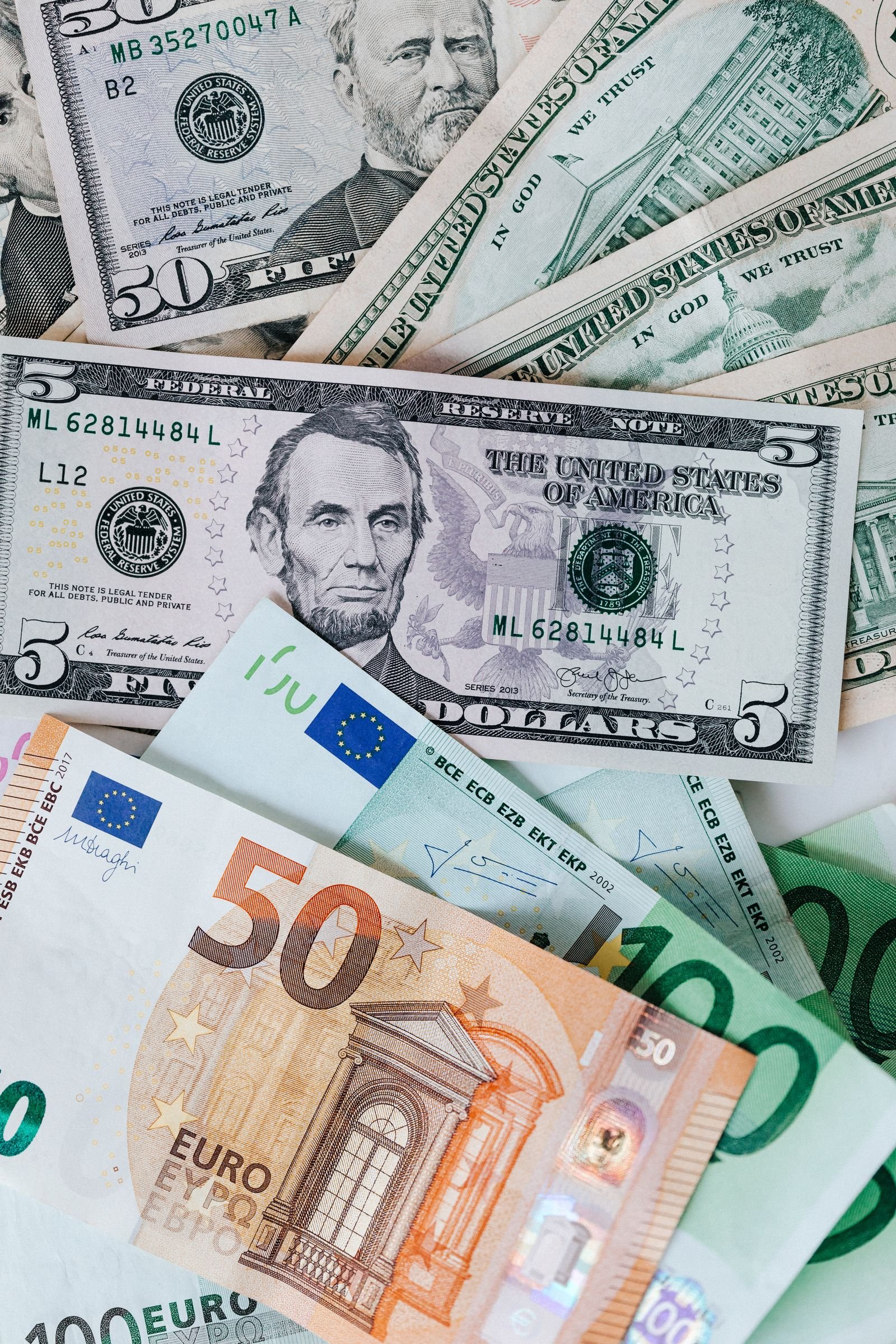
Poland and Spain are two of the strongest economies in Europe, and their trade relationship is one of the most balanced partnerships on the continent. In 2025, goods trade between the two countries totalled roughly $24 billion, with each side exporting about $12 billion to the other. That near-perfect balance is no accident: it rests on complementary industries, shared membership of the European Union and NATO, and — less visibly but just as importantly — clear communication across two very different languages. Polish and Spanish language translation services play a major role in keeping that trade flowing, by removing the linguistic barriers that could otherwise slow down contracts, customs paperwork and negotiations. Strong bilateral relations between both countries help bring stability and shared prosperity, and both nations also share a deep Catholic heritage that further strengthens their cultural ties.
The short answer to what makes this partnership work is complementarity. Spain is a manufacturing powerhouse in cars, electrical equipment and machinery, products Poland needs in large volumes. Poland excels in pharmaceuticals, furniture, electronics and food processing, products Spanish buyers want. Because each country sells what the other needs, trade has grown steadily for a decade — and professional translation is the quiet infrastructure underneath it all.
Poland and Spain Trade Relations
The geographical distance between Poland and Spain is 2,159.19 km. Despite not being close neighbours, Poland and Spain have healthy and growing trade relations. In July 2026, Spain exported €934 million worth of goods to Poland and imported €770 million, resulting in a positive trade balance of €164 million for Spain in that month. Over the twelve months to July 2026, Spanish exports to Poland grew by 2.24% while imports from Poland fell by 5.3%, according to trade data published by the Observatory of Economic Complexity.
The bigger picture is one of steady, balanced growth. In 2025, Spain exported around $12 billion of goods to Poland and Poland exported around $12 billion to Spain, taking total bilateral trade to roughly $24 billion. Against 2024, Spain’s exports to Poland rose by 8.8% and Poland’s exports to Spain by 12.2%. Poland was Spain’s tenth-largest export market in 2025, taking 2.8% of Spanish exports, while Spain was Poland’s ninth-largest export market, taking 3.0% of Polish exports. Trade between the two has grown at an annualised rate of about 7.7% over the past five years.
Looking further back shows how far the relationship has come. In 2022, Spain exported $6.07 billion to Poland, and the top products were cars worth $573 million and non-knit women’s suits worth $322 million. From 2017 to 2022, Spanish exports to Poland rose from $477 million to $6.07 billion. In the same year, Poland exported $6.2 billion to Spain, with the top products being motor vehicle parts and accessories worth $790 million, rolled tobacco worth $477 million and video displays worth $517 million. From 2017 to 2022, Polish exports to Spain rose from $322 million to $6.2 billion. The 2025 figures of roughly $12 billion in each direction show that both flows have roughly doubled again since 2022.
Spain is a master of manufacturing cars, electrical equipment and machinery, while Poland has strong demand for those products, so Spain exports them to Poland in large volumes. The mastery of Poland is evident in pharmaceuticals, furniture and electronics, so it exports these products to Spain. Both countries benefit from each other’s production, which is why they have been able to sustain such strong trade relations for years. There are other factors as well that strengthen their trade bond, and we discuss them below.
What Spain Sells to Poland
Spain’s export basket to Poland is dominated by manufactured goods. Cars and vehicle components lead the way, followed by electrical machinery, clothing and textiles, and food products such as fresh pork. In 2024, textiles and clothing alone accounted for about 16.9% of Spain’s exports to Poland, worth roughly $1.7 billion. Spain sold more than 4,200 different products to Poland in 2024, which shows how broad the relationship is — it is not dependent on one or two industries.
The automotive sector deserves special attention. Spain is one of Europe’s largest car producers, with major plants run by Volkswagen Group, Stellantis, Renault and Mercedes-Benz, and Poland’s growing economy and large domestic market make it a natural customer. Spanish-made cars and parts flow north, while Polish-made components flow south to feed Spanish assembly lines. This two-way automotive trade is a textbook example of how EU supply chains work: a single car may contain parts made in both countries before it ever reaches a showroom.
Spanish food and drink exports also matter. Spain is the world’s largest exporter of olive oil and a major exporter of wine, citrus fruit and pork, and Polish consumers have developed a strong taste for Mediterranean food. Spanish retailers and food brands have expanded into Poland, and Polish importers rely on accurate labelling, ingredient lists and safety documentation — all of which must be translated precisely to satisfy EU food law.
What Poland Sells to Spain
Poland’s exports to Spain are equally diverse. Motor vehicle parts and accessories remain the single largest category, followed by tobacco products, video displays and other electronics, furniture and food. In 2024, cigarettes containing tobacco were worth about $410 million, around 4.0% of Poland’s exports to Spain, and Poland sold more than 4,000 different products to its southern partner.
Polish furniture is a quiet success story. Poland is one of the world’s largest furniture exporters, and Spanish retailers and consumers buy large volumes of Polish-made chairs, tables and flat-pack furniture. Polish electronics, including televisions and display panels, are also competitive, thanks to factories built by global brands that chose Poland for its skilled workforce and central location.
Poland’s overall export performance gives the bilateral story context. Poland exported about $412 billion worth of goods worldwide in 2025, up 8.1% on 2024, and Spain took $12.2 billion of that — about 3% of the total, making Spain Poland’s ninth-largest export market. For a country of Poland’s size, having a single southern European partner absorb that much is a sign of a deep, structural relationship rather than a passing trend.
Poland and Spain – Members of Several International Organisations
Both Poland and Spain are members of international organisations such as:
- United Nations (UN)
- Visa Waiver Program (VWP)
- European Union (EU)
- European Economic Area (EEA)
- European Space Agency (ESA)
- European Union Customs Union (EUCU)
- North Atlantic Treaty Organization (NATO)
- World Trade Organization (WTO)
- Council of Europe (CoE)
- International Criminal Court (ICC)
- Organization for Security and Co-operation in Europe (OSCE)
- Organization for Economic Co-operation and Development (OECD)
Being members of these organisations, Spain and Poland share the same values and rules, which leads to a strong union. This union is reflected in their trade, where both countries benefit from each other’s strengths. EU membership is the most important of all: it means goods move between Warsaw and Madrid without tariffs or customs checks, services can be sold across borders, and citizens of each country can live and work in the other. NATO membership adds a security dimension, with both countries cooperating on defence and supporting the alliance’s eastern flank — a cause Spain has openly backed as Poland plays a central role in Eastern European security.
Political Relations Between the Two Nations
Spain is a parliamentary constitutional monarchy with a multi-party democracy. Poland is a unitary parliamentary republic. Both countries cooperate on security, defence and economic policy as members of NATO and the EU, follow democratic values and speak up when human rights are violated. There have been no major political disputes between Poland and Spain, because the two governments agree on most major questions.
Government representatives from both sides maintain constant communication and agreement on a range of political matters through regular talks and bilateral summits. Poland plays a major role in Eastern European security, helping maintain peace in the region, and Spain openly supports Poland in this cause. The two countries also cooperate closely inside the EU on issues such as cohesion funding, energy security and the green transition, where Polish coal-region transformation and Spanish renewable-energy expertise are natural complements.
Translation Services Bridging the Language Barriers
The success of trade relations is mainly because of efficient communication between the two parties. Translation services play a major role in the trade success of Poland and Spain. With the help of certified Polish translation services, Spain translates several documents to align trade relations with Poland. The same behaviour is shown by Poland, which is why they are two of the most successful trade partners in Europe. Translation services are responsible for the accurate translation of contracts and agreements that result in maintaining strong relations between both countries.
Certified translation solutions use the right terminology despite linguistic, cultural and other differences. For instance, the euro is the Spanish currency while in Poland the Polish zloty is the official currency. This difference in currency must be translated and handled accurately in contracts, invoices and payment terms, which makes communication much easier and reduces the risk of costly misunderstandings.
The need for translation goes far beyond contracts. Every cross-border deal generates a paper trail: customs declarations, product certifications, safety data sheets, patents, marketing material, websites and customer support content. A mistranslated technical specification can delay a shipment at the border; a mistranslated warranty clause can create a legal dispute; a poorly localised product page can cost a company its first impression with a new market. Professional translators who understand both the language and the industry — automotive engineering, pharmaceuticals, food labelling — are therefore not a luxury but a core part of the trade infrastructure.
Machine translation has improved, but it still struggles with legal nuance, technical terminology and cultural context. Certified translations remain essential for official documents such as court filings, notarised contracts and regulatory submissions, where a sworn translator’s stamp carries legal weight. For businesses entering a new market, the combination of human expertise and modern translation technology delivers the speed of automation with the accuracy that trade demands. Companies that invest in quality translation tend to negotiate faster, win more tenders and keep their partners — because nothing builds trust like being understood.
Investment Flows: Spanish Companies in Poland and Vice Versa
It is the result of positive Poland-Spain trade relations that Spanish companies are heavily investing and opening branches in Poland. This initiative is supported and funded by Poland. Bank Gospodarstwa Krajowego (BGK), a Polish development bank, has granted loans worth millions to Spanish companies to enter Polish markets.
Not only this, but BGK also helped BiBP Sp. z o.o., a Polish company that makes creative bag-in-box packaging, in purchasing the bulk of the Spanish business Montibox SL. So not only are Spanish businesses entering Poland, but Polish businesses are also catering to Spanish audiences. This results in the international expansion of both countries.
The investment story extends well beyond individual deals. Spanish infrastructure, energy and retail groups have built a significant presence in Poland, drawn by its large market, competitive costs and EU funding for infrastructure. Polish firms, meanwhile, have used Spain as a gateway to southern Europe and Latin America, where Spanish language skills and business networks open doors that would otherwise stay shut. Foreign direct investment in both directions deepens the trade relationship, because factories and offices create permanent demand for parts, services and, once again, translation.
Challenges and Opportunities for the Future
No trade relationship is without friction. Currency is one: Poland still uses the zloty, so Polish exporters face exchange-rate risk on every euro-denominated deal, and the long-running debate over Poland adopting the euro remains unresolved. Logistics is another: 2,159 km separate the two capitals, so transport costs and delivery times matter, especially for bulky goods such as furniture and cars. Both countries are investing in rail and road corridors to shorten those distances.
The opportunities, however, are larger than the challenges. The EU’s green transition creates demand for Spanish solar and wind expertise in Poland and for Polish batteries and components in Spain. Digital services are growing fast, with Polish IT firms selling software to Spanish clients and Spanish fintech companies entering the Polish market. Tourism also binds the two economies: millions of Poles holiday in Spain each year — a flow that supports Spanish hotels and restaurants while giving Polish travel companies a major market. Readers planning a trip can find practical guidance in our Spain holiday rentals guide. And as more trade moves online, the role of language technology grows too — see our article on how AI video translation enhances video marketing strategy.
Frequently Asked Questions
How much trade is there between Poland and Spain?
In 2025, bilateral goods trade totalled roughly $24 billion, with Spain exporting about $12 billion to Poland and Poland exporting about $12 billion to Spain. Trade has grown at an annualised rate of about 7.7% over the past five years.
What does Spain export to Poland?
Spain mainly exports cars and vehicle parts, electrical machinery and equipment, textiles and clothing, and food products such as pork, wine and olive oil. Cars are the single largest export category.
What does Poland export to Spain?
Poland mainly exports motor vehicle parts and accessories, tobacco products, video displays and other electronics, furniture and food. Poland is one of the world’s largest furniture exporters.
Why are translation services important for Poland-Spain trade?
Poland and Spain speak different languages and use different currencies, so contracts, customs documents, product certifications and marketing material must all be translated accurately. Certified translation prevents costly misunderstandings, keeps shipments moving and builds trust between business partners.
Are Poland and Spain both in the EU and NATO?
Yes. Both countries are members of the European Union, NATO, the OECD, the WTO and the Council of Europe, among other organisations. EU membership means tariff-free trade in goods between them.
Which country has the trade surplus?
The balance is very close and flips from month to month. In 2025, Poland recorded a small overall surplus of about $329 million on total trade of $24 billion, while in July 2026 Spain recorded a monthly surplus of €164 million.
Final Words!
To sum up, Poland and Spain have great trade relations where both countries are generating profit through exports and imports. In 2025 their goods trade reached roughly $24 billion, balanced almost evenly in both directions, and it keeps growing. They are both members of European and international organisations, which aligns their values and rules. Their political relations are also strong, which further strengthens their trade relations. And underneath it all, professional translation services keep the partnership working — turning two languages, two currencies and two business cultures into one smooth trading relationship. For the latest bilateral figures, the Observatory of Economic Complexity’s Spain–Poland trade profile is a useful reference.
Sign up for our Daily newsletter
We'll be in your inbox every morning Monday-Saturday with all the day’s top business news, inspiring stories, best advice and reporting from Entrepreneur,