Short answer: Contact a lawyer after a dog bite as soon as possible if the injuries are serious, the owner is unknown or uncooperative, the dog has attacked before, an insurance company is pressing you to settle, or you are unsure of your rights. In the UK you generally have three years from the date of the incident to start a claim (children have until their 21st birthday), but evidence fades fast — so getting advice early protects both your health and your claim, even if you ultimately decide not to pursue it.
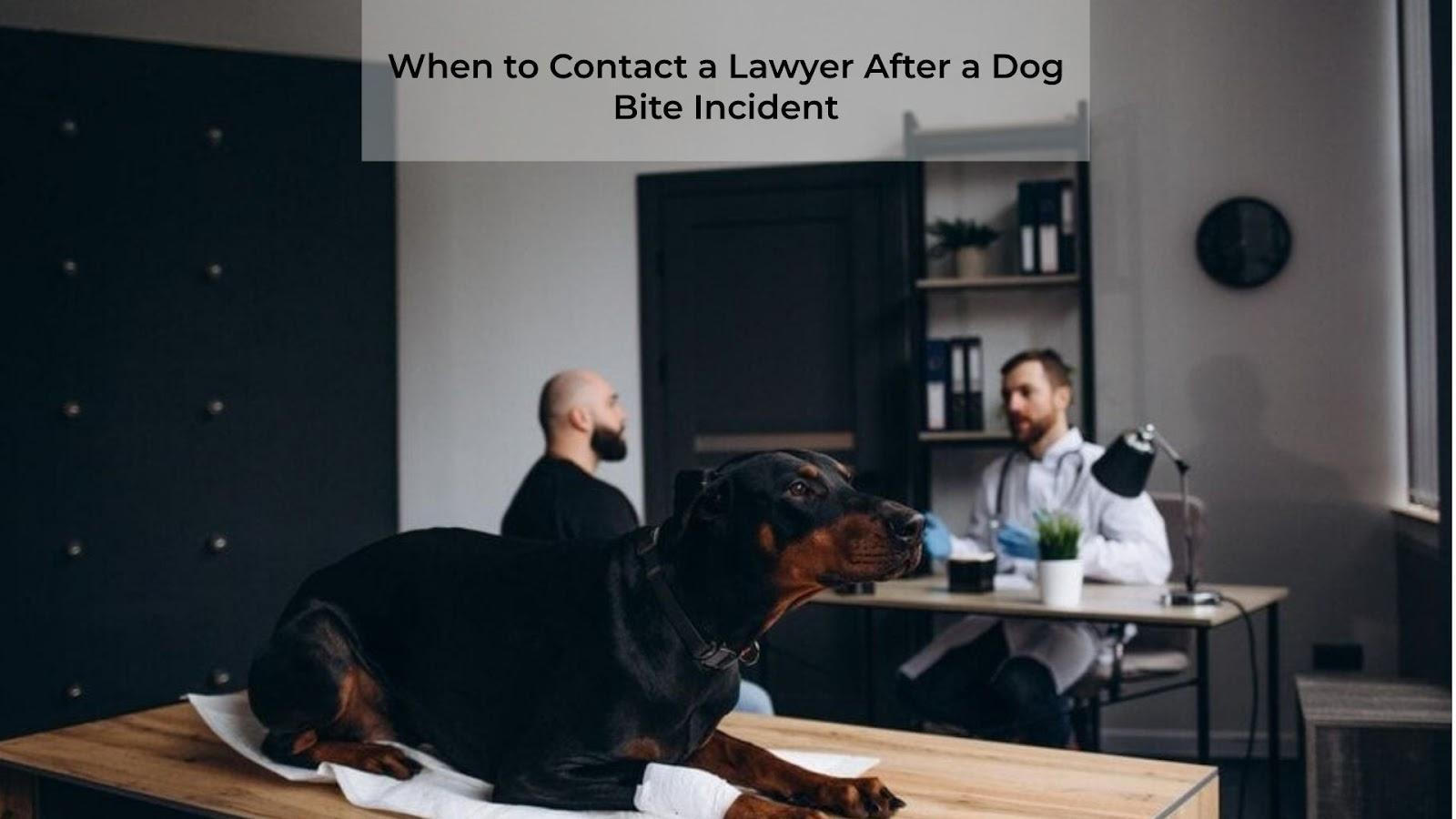
A dog bite may be very dangerous too thus, there could also be psychological or physical injuries. You could be bitten as you walk down your street going to a friend’s house, just playing with a dog in a public arena. Whatever the location is there’s a time one must know when to seek services from the lawyer after getting a dog bite. Knowing when one may require legal consultancy can prove very pivotal in ensuring that one’s rights are protected, and also adequate compensation is received for injuries sustained or damages incurred. In the article below, some of the necessary situations on when to reach out to a lawyer after a dog bite will be outlined.
First Steps After a Dog Bite (Before You Call a Lawyer)
Your health comes before any legal question. Move to safety, then:
- Get medical attention promptly, even for a bite that looks minor. Dog bites can cause deep puncture wounds, torn tissue, nerve damage and infection; doctors will clean the wound properly, assess the need for a tetanus booster or antibiotics, and check the rabies risk. Keep every medical record and receipt.
- Identify the dog and its owner. Ask for the owner’s name, address and phone number, the dog’s name and breed, and whether its vaccinations are up to date. If the owner refuses or flees, note the dog’s description and the location.
- Report the incident. In the UK, report a dangerous or out-of-control dog to the police on the non-emergency number 101, and keep the crime reference number. Attacks in public places must be reported; the police can also help identify the owner.
- Preserve evidence. Photograph the injuries, torn clothing and the scene; write down exactly what happened while it is fresh; collect names and phone numbers of witnesses; and keep a diary of pain, treatment and time off work.
- Do not admit fault or accept blame in conversation with the owner or an insurer, and do not sign anything or accept a settlement offer before taking advice.
These steps matter because dog bite cases are won or lost on evidence — and evidence is easiest to gather in the first days after the incident.
Related Legal Resources
If you’re dealing with a dog bite case, it is a type of personal injury situation that requires legal help. Newport News, with its busy streets and bustling neighborhoods, is a place where accidents, whether involving cars or animals, can happen unexpectedly. In cases like these, it’s essential to consult an experienced attorney who can guide you through the legal process and ensure you receive proper compensation. For instance, if you’ve been bitten by a dog, seeking the expertise of Personal Injury Attorneys can be crucial in protecting your rights. A personal injury attorney newport news can help you navigate the complexities of your case, whether it involves negotiating with insurance companies or pursuing legal action for your injuries.
1. When the Dog’s Owner is Unidentified or Uncooperative
The owner needs to be identified within the initial response to a dog bite. Many cases of such owners are usually unknown, especially when in public areas or allowing their dogs to roam about. In case the owner refuses to share any information regarding the situation and flees the scene, there remains no other move but to contact an attorney immediately. A lawyer can make all the possible legal efforts to locate the owner of the dog and get you access to information such as the dog’s vaccination history and his or her insurance details.
If the dog’s owner refuses liability or charges provocation for the attack, then a professional attorney can gather evidence on your behalf to prove the case. In the UK, if the owner cannot be traced or is uninsured, a claim may still be possible through the Criminal Injuries Compensation Authority (CICA), and a solicitor can advise whether that route applies to you.
2. When You Suffer Serious Injuries
If the dog’s injury is serious and cuts are deep, bones and nerves are broken, or even infected, you are likely to see an attorney. Serious injuries mean protracted medical care and rehabilitation with a potential for permanent disfigurement.
Medical expenses will be sure to balloon for serious injuries, and an attorney can ensure that you receive:
- Current and future cost of medical treatments.
- Loss of earnings resulting from absence from work
- Pain and anguish
- Permanent disability or disfigurement
The lawyer will help value your case and get compensation through all parts of your injury. Children are especially vulnerable — the under-5 age group accounts for the largest share of dog-bite victims — and facial injuries or scarring on a child can justify a substantial claim, including the cost of future cosmetic treatment. Compensation for a child is usually approved by a court at an infant settlement hearing, and a solicitor will handle that process.
3. When the Dog Has a History of Aggression or Attacks
Some dogs that bite people have an aggressive history or past attacks. If such a dog previously harmed someone, the owner might be liable for failing to take precautions not to allow another attack on another person.
For example, a lawyer can discover the background history of the dog’s behavior and may find that the owner knew or had reason to know of the vicious tendencies of such an animal. If the dog was not controlled or restrained in any way, a lawyer can convincingly argue for proving that the owner was negligent, and thereby help you get sued against such a cause of negligence by the owner.
A solicitor can also check whether the dog has been reported before, whether the owner has been warned by the police or the local authority, and whether the dog is a banned breed or subject to a control order. Any of those findings strengthens a claim considerably, and they are much harder for an individual to uncover alone.
4. When You Are Not Sure About Your Legal Rights
Dog bite laws vary considerably from one state and locality to another. In some localities, strict liability laws are automatically applied. That is, dog owners are always held liable for any injuries inflicted by their dogs, while in others, fault must be proved; that is, the owner knew or should have known of a dangerous practice by the dog.
If you are a bit confused about the laws prevalent in your place of residence or how they relate to your case, then a lawyer can clarify whether the owner is liable and what steps you have to take to protect your rights. Other than that, an attorney will be useful while drawing up paperwork, keeping track of deadlines, and if possible, negotiating with the insurance companies so that you may concentrate on recovery.
In the UK, the key laws are the Animals Act 1971, under which the keeper of an animal can be liable for damage it causes, and the Dangerous Dogs Act 1991 (as amended in 2014 to cover private property), which makes it an offence to allow a dog to be dangerously out of control in any place, public or private. A solicitor will explain which of these applies to your case and what you need to prove. In the United States, the picture is different: some states apply strict liability, others use a “one-bite rule” or negligence standard, and time limits vary from one to three years depending on the state — another reason local legal advice matters.
5. When Insurance Companies Are Involved
After a dog bite incident, you can expect to receive a call from an insurance company representing the owner of the dog that attacked you. They may sound helpful, but insurance companies as a group have significantly more interest in their bottom line than in your interests or those of your injured party. Be cautious when dealing with adjusters or when they make settlement offers that sound too low.
You may hire a lawyer to deal with the insurance company on your behalf to make sure that you get a fair value for what you will be receiving. Such a lawyer will review settlement offers made by the insurance company to see if they can adequately cover all the damages. If there is an inability to reach a fair settlement, a lawyer can help you file a lawsuit so that you get compensated as you deserve.
In most cases, compensation is paid by the dog owner’s pet insurance or home insurance policy, not by the owner personally — which is worth knowing, since many victims hesitate to claim against a neighbour or relative. An early offer is often made before the full extent of the injury is known: scarring, infection and psychological effects can take weeks or months to settle. Never accept a first offer without advice, and never give a recorded statement to an insurer without speaking to a solicitor first.
6. When You Suffer Emotional Trauma
Other than injury to the body, a dog bite inflicts emotional and psychological shock. The victim can develop anxiety, PTSD, or fear because of the attack.
A lawyer will not only help you assess the full scope of your damages, including emotional distress but can also ensure that this aspect of your injury is included in a legal claim. Emotional and psychological damages can often be as devastating as a physical injury. Get these included in your personal injury claim.
Adults and children alike can develop a lasting fear of dogs, nightmares, or avoidance of places where dogs are present. If symptoms persist, ask your GP for a referral for psychological support, and keep a record of how the trauma affects daily life — sleep, work, school, social activities — because that record forms part of the evidence for a psychological injury claim. Related guidance on coping after a traumatic accident can be found in our articles on recovery after a car accident and on recovery after a truck crash, which cover similar steps for documenting emotional harm.
7. When the Dog Bite Occurs on Public or Private Property with Potential Liability Issues
Location Where the Dog Bite Occurs The location may also determine whether you should seek an attorney. If the attack occurred on someone else’s property, such as a public park, a store, or a private home, you may be able to pursue the dog owner and/or property owner for damages as both parties may share the liability for the occurrence. For example, if the owner fails to post a warning sign or provide alternative safe conditions, the owner may share responsibility for the attack.
A lawyer can investigate every aspect of the case, including those that hold property owner liability, to ensure that there is no doubt that all parties liable to appear before the courts are located. This matters for delivery workers, postal workers, carers and tradespeople bitten while doing their job: the employer may also have duties, and a solicitor can advise whether an employer’s liability or accident-at-work claim runs alongside the dog bite claim. For more on when specialist advice is needed, see who needs a slip and fall accident lawyer the most and what a truck accident lawyer does.
8. When You Are Unsure About Settling or Going to Trial
Although some dog bite cases will settle without the necessity of going to trial, that is not so in all cases. The first thing to do in case such an offer is made is to determine whether the amount is fair and adequate compensation for all your injuries, damages, and suffering.
An attorney can guide you if you are unsure whether the settlement offer is fair or if you are against tough legal odds. A reputable personal injury lawyer, who specializes in dog bite cases, may be able to evaluate the offer and determine whether it’s a good idea to accept it or to take the settlement to court.
Most dog bite claims settle out of court — solicitors negotiate with the insurer, and a court hearing is only needed if no fair settlement can be reached. Knowing the value of your claim is the key: solicitors use the Judicial College Guidelines, which set guideline awards for categories of injury (for example, minor hand injuries up to around £6,280, loss of part of a finger roughly £10,400–£28,820, and severe hand injuries from around £81,790 upwards), alongside your medical evidence, lost earnings and care needs. Many UK personal injury solicitors work on a no win, no fee basis, so an initial consultation to find out whether you have a claim usually costs nothing.
Time Limits: Do Not Wait Too Long
In the UK you generally have three years from the date of the dog bite to start a personal injury claim. Children have until their 21st birthday, and a parent or guardian can claim on a child’s behalf at any time before that. If the injured person lacks mental capacity, the time limit may not apply in the usual way. In the US, time limits vary by state and are often shorter. Whatever the jurisdiction, waiting is risky: witnesses forget details, CCTV is overwritten, and insurers argue that a delayed claim means the injury cannot have been serious. Contact a solicitor early even if you are unsure — an early conversation costs little and preserves all your options.
What Compensation Can Cover
- Pain and suffering, including scarring and disfigurement
- Psychological trauma, such as anxiety and PTSD
- Medical treatment, including surgery, antibiotics, physiotherapy and future cosmetic treatment
- Loss of earnings and reduced earning capacity
- Care and assistance needed during recovery
- Damaged clothing and property, and travel costs to medical appointments
Frequently Asked Questions
1. When should I contact a lawyer after a dog bite?
You should contact a lawyer if the dog bite results in serious injuries, if the dog’s owner is uncooperative or unknown, if you are unsure of your legal rights, or if the dog has a history of aggression. A lawyer can help you navigate the complexities of your case, handle insurance negotiations, and ensure you are fairly compensated for medical bills, lost wages, and emotional distress.
2. What types of injuries require legal action after a dog bite?
Serious injuries like deep puncture wounds, broken bones, nerve damage, infections, or scarring may require legal action. If the injuries are significant enough to cause long-term pain or require ongoing medical treatment, it’s essential to consult with a lawyer to explore your options for compensation.
3. How can a lawyer help if the dog owner is not cooperating?
If the dog owner is not cooperating or is trying to avoid responsibility, a lawyer can assist in tracking down the owner, gathering evidence, and filing a claim on your behalf. They can also help ensure you have access to important information like the dog’s vaccination records and insurance details, and take legal action if needed.
4. Can a lawyer help me if the dog bite happened on someone else’s property?
Yes, if the dog bite occurred on public or private property, the property owner might share some responsibility for the incident, especially if they failed to provide adequate warnings or safety measures. A lawyer can investigate the circumstances of the incident and determine if property owner liability is involved in your case.
5. How long do I have to make a dog bite claim?
In the UK, you generally have three years from the date of the attack to start a claim. Children have until their 21st birthday, and a parent or guardian can claim on their behalf sooner. In the US, time limits vary by state, so check the local rule promptly. Whatever the jurisdiction, seek advice early — evidence and witness memories fade quickly.
6. How much compensation can I claim for a dog bite?
There is no fixed amount: it depends on the severity of the injury, the level of scarring, the psychological impact, time off work and the treatment required. Guideline awards in the UK range from a few thousand pounds for minor injuries to six figures for severe hand injuries with permanent disability. A solicitor will assess your injuries fully before valuing your claim, and many work on a no win, no fee basis.
Conclusion
Contact a lawyer after a dog bites you so that your rights in court will not be compromised and so that you can get the fair compensation you deserve for injuries or damages. If any of the situations described above is applicable in your case whether the dog owner is uncooperative, whether your injuries are severe, or you lack an idea of what to do about the situation, it is prudent to see an attorney. If you have been a victim of a dog bite or attack then you will benefit from the experience and knowledge of an attorney who deals with dog bites. An attorney can guide you in complicated law and negotiation with insurance companies while taking the case to court if necessary. The difference between winning your case and losing could be in the action taken in time and having an attorney.
Note: This article is general information, not legal advice. Dog bite law differs between the UK and the US and between states. Speak to a qualified solicitor or attorney in your area for advice about your own case.
Sign up for our Daily newsletter
We'll be in your inbox every morning Monday-Saturday with all the day’s top business news, inspiring stories, best advice and reporting from Entrepreneur,